The Ultimate Guide to Choosing a Commercial Grill for High-Volume Kitchens
July 14, 2026
How Preventive Maintenance Saves You Thousands in Equipment Repairs
July 18, 2026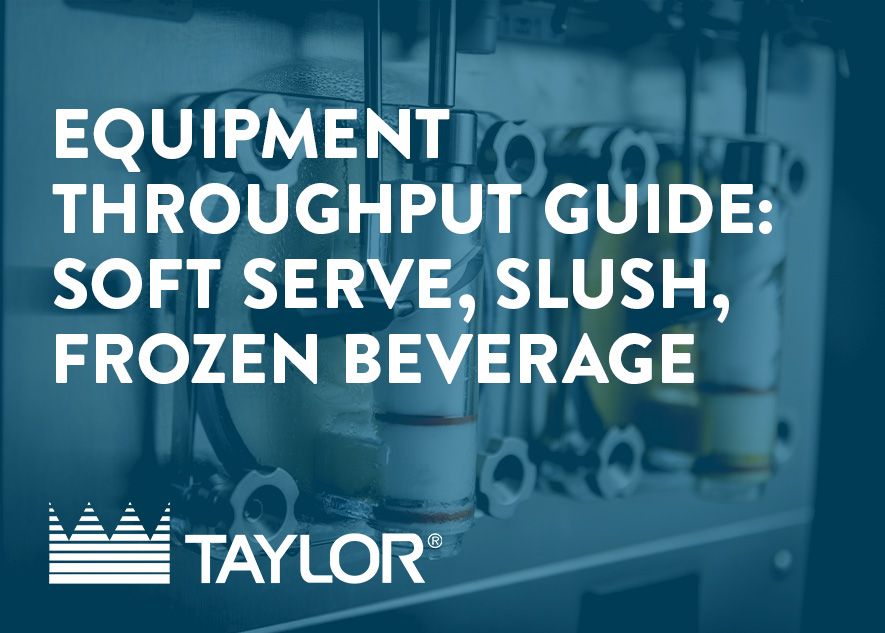
How Many Servings Per Hour? A Throughput Guide for Soft Serve, Slush, and Frozen Beverage Equipment
Buying the wrong size equipment is one of the most common and costly mistakes in foodservice. Too small and you're creating a bottleneck at your busiest hour. Too large and you've tied up capital in capacity you never actually use. The fix is straightforward: size your equipment to your volume, not your best guess. This guide breaks down how to think about throughput for commercial soft serve machines, commercial slush machines, and frozen beverage equipment so you can make a more confident decision before you buy.
Why Throughput Capacity Matters When Sizing Commercial Equipment
Throughput capacity is the number of servings your equipment can produce in a given time frame, usually measured per hour. It's the number that tells you whether your machine can keep up with your operation at its busiest point, not just its average.
Most operators underestimate peak demand when sizing equipment. The machine that handles a slow Tuesday lunch with no issues may struggle on a Friday evening rush. Throughput capacity is what separates equipment that keeps up from equipment that holds you back.
How to Calculate Servings Per Hour
Start with your busiest hour. Count how many frozen dessert or frozen beverage transactions go out during that window on a high-volume day. That's your target throughput number.
Then factor in serving size. A 6 oz soft serve cone uses significantly less mix per transaction than a 16 oz shake or frozen beverage. Output figures like gallons per hour have to be converted to servings per hour based on your actual portion sizes.
The formula is simple: (machine output in ounces per hour) ÷ (serving size in ounces) = servings per hour. From there, how to size your soft serve machine to your volume walks through the rest of the decision framework.
Soft Serve Machine Capacity: What Drives Output
A commercial soft serve machine typically produces between approximately 100-420 3.5 ounce servings per hour depending on model, mix viscosity, draw size, and ambient conditions.
Pump-fed machines generally provide higher overrun and more consistent recovery during sustained demand than comparable gravity-fed models, making them a common choice for high-volume operations. .
Understanding how your machine's overrun settings affect your actual output is worth working through before you finalize a capacity plan. How does a soft serve machine work covers the mechanics behind output and overrun in more detail.
Taylor's soft serve equipment spans a range of output capacities. A Taylor distributor can match you to the right model based on your confirmed peak-hour demand.
Slush Machine Capacity: Gallons Per Hour Explained
Commercial slush machines are typically rated by gallons per hour, which measures how much product the freezer can process and hold at serving consistency. A typical commercial unit produces approximately 10-18 gallons per hour depending on hopper and cylinder size, ambient temperature, and mix formulation.
To estimate servings per hour, convert the machine's hourly output to ounces, then divide by your serving size. For example, a machine producing 3 gallons per hour delivers 384 ounces per hour. That equals about 32 twelve-ounce servings or 24 sixteen-ounce servings, assuming consistent draw and normal operating conditions.
Multi-hopper/cylinder configurations let you serve multiple flavors simultaneously, which effectively increases your total throughput per footprint. Taylor's slush machines are available in multiple configurations to match different venue demands.
Frozen Cocktail Machine Capacity
Frozen cocktail machines are similarly rated by gallons per hour at standard operating conditions. Output varies by model and configuration, with commercial units typically producing approximately 8-15 gallons per hour depending on alcohol percentage, product type and draw frequency.
For bars and cocktail programs, product consistency is as important as raw volume. A machine that hits high throughput but drifts on temperature or texture through a busy evening service creates a product quality issue that shows up in the customer experience. Taylor's frozen beverage machines are built to hold consistent product quality through sustained service.
Matching Equipment Capacity to Peak-Hour Demand
The most important number in your capacity plan is your peak-hour demand, not your daily average. Average demand is useful for mix ordering and cost planning. Peak demand is what determines whether your equipment keeps up or creates a line.
Build in a buffer of at least 15 to 20 percent above your peak throughput target. Equipment running at 100 percent capacity has no room to absorb a surge. Equipment with a buffer handles rushes without slowing the line.
Taylor Authorized Service technicians can also review your equipment performance and flag whether your current setup is operating within its intended output range, which is a useful check if you suspect a throughput issue is equipment-related rather than sizing-related.
Single vs. Multi-Flavor Configurations and Throughput
Single-flavor machines dedicate their production capacity to one product. Multi-flavor configurations allow multiple flavors or products to be served from the same unit, with production capacity distributed across individual freezing cylinders or dispensing options. The tradeoff is menu variety versus the maximum throughput available for each flavor.
For high-volume QSR environments, the right configuration depends on how your menu items are sold during peak periods. Single-flavor machines maximize production for one product, while multi-flavor configurations provide greater menu flexibility. If your operation serves two or more flavors simultaneously, evaluate the available throughput for each individual flavor and confirm that each product can meet your peak-hour demand without impacting service speed or consistency.
Common Capacity Planning Considerations
Sizing to average demand instead of peak demand is one of the most common planning oversights.. The second is overlooking recovery time. After a heavy draw period, most machines need time to return product to serving temperature and consistency. That recovery window reduces effective throughput during back-to-back rushes.
It's also important to consider whether a single machine will meet your operational needs. Some high-volume locations run two units for redundancy as much as capacity. If one unit goes down, the other keeps service running. That kind of operational continuity is worth factoring into your equipment plan.
Get the Right Equipment for Your Volume
Throughput planning is the work that happens before you buy, and it pays off every shift after. Use your confirmed peak-hour demand as the anchor, build in a buffer, and match machine capacity to that number with specific Taylor specs confirmed by your distributor.
Ready to run the numbers on your operation? Find a Taylor distributor near you. They can review your volume requirements and recommend the right configuration for your location.