

6 Signs Your Commercial Soft Serve Machine Needs Professional Service
May 13, 2026
Frozen Carbonated Beverages: What to Know Before Adding FCB to Your Menu
May 16, 2026
Clamshell Grill vs. Flat-Top Grill: Which Is Right for Your Kitchen?
A good grill makes a busy kitchen run. A great one makes it run faster, more consistently, and with less strain on your team. For operators deciding between a clamshell grill and a flat-top, understanding where each format excels makes all the difference. Ticket times, labor requirements, menu flexibility, and long-term operating costs should all be considered when making a decision.
What Is a Clamshell Grill and How Is It Different from a Flat-Top?
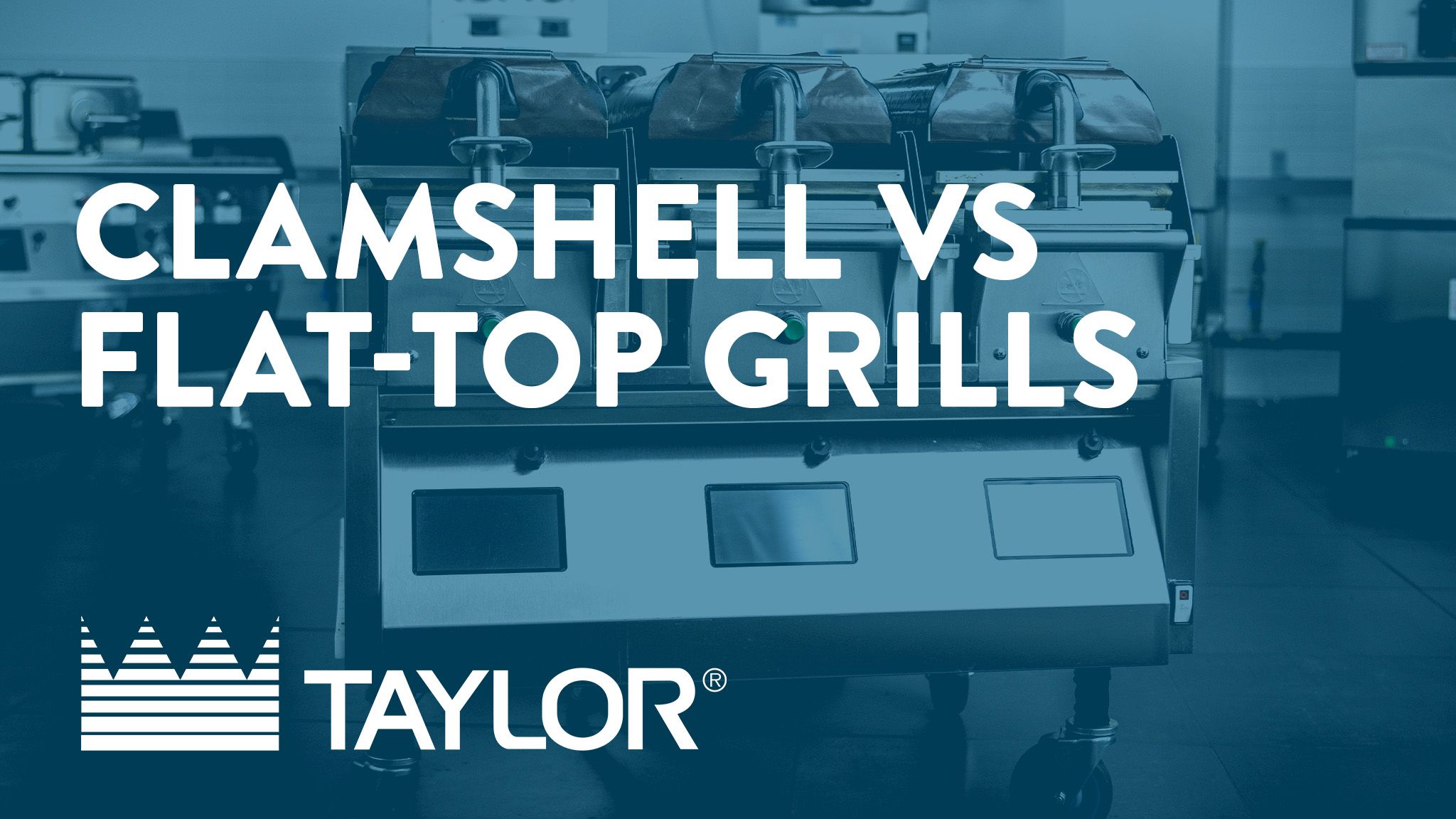
A clamshell grill cooks from both the top and bottom simultaneously. The upper platen lowers onto the food, applying heat from above while the lower surface does the same from below. That two-sided cooking method is what sets it apart from a flat-top, which only applies heat from underneath and requires an operator to manually flip the product.
Practically, this can lead to faster cook times, more consistent results, and less reliance on individual cook technique. For operations where repeatability matters, that difference adds up quickly!
The Case for Clamshell Grills: Speed, Consistency, and Labor Savings
Speed is where clamshell grills really shine. Cooking from both sides at once cuts cook times significantly compared to a flat-top, which means shorter ticket times and more throughput during peak hours. For a QSR running high volumes of burgers, chicken, or breakfast items, that speed is a genuine competitive advantage.
Consistency is the other major factor. Because the upper platen controls both pressure and heat, the finished product looks and tastes the same whether it's the first cook of the morning or the last one of the night. That kind of repeatability is hard to achieve on a flat-top where results can vary based on who's working the grill.
Labor efficiency rounds out the case. A two-sided grill doesn't require someone to stand over it and flip product, which frees your team up to handle other tasks during a rush. In a labor market where every minute counts, that matters.
For a deeper look at what makes this format work, top features that make two-sided grills a must for high-volume kitchens is worth a read.
The Case for Flat-Top Grills: Versatility and Menu Range
Flat-tops have their place. A traditional commercial flat grill typically offers flexibility for diverse cooking techniques and mixed menu items. Delicate items, irregularly shaped proteins, and dishes that require constant movement or adjustment are generally easier to manage on an open cooking surface.
For operations with highly diverse menus or scratch-cooking formats, that versatility can be valuable. The tradeoff is speed, consistency, and the labor overhead that comes with manually managing every item on the grill.
Head to Head: How the Two Formats Stack Up
When speed and throughput are the priority, clamshell grills win the comparison. Cook times are faster, output is more consistent, and the labor requirement is lower. For QSRs and high-volume fast-casual operations running a focused menu, there's a clear case for the clamshell format.
When menu flexibility is the priority, flat-tops can offer room to work with. But that flexibility comes at a cost in ticket times and consistency, particularly during rush periods when precision matters most.
In truth,most high-volume operators don't need the versatility of a flat-top enough to justify the tradeoff. If your menu has a core set of items you're cooking at volume every shift, a clamshell griddle is almost always the more efficient choice.
Which Kitchen and Volume Level Favors Each Grill?
High-volume QSRs, burger concepts, and breakfast-focused operations are natural fits for clamshell grills. The format is built for speed and repetition, and it delivers both reliably. Multi-unit operators benefit especially from the consistency it brings across locations.
Flat-tops tend to make sense in full-service restaurants, scratch kitchens, or operations where the menu demands a wide range of cooking techniques. However, a commercial kitchen grill in the clamshell format can be a good fit for those operations and QSR or fast-casual concepts.,
Not sure which direction makes sense for your operation? Taylor's grill selector is a quick way to narrow it down based on your specific menu and volume requirements.
Maintenance and Service: What to Expect from Each Format
Both grill formats require consistent cleaning and preventive maintenance to perform well over time. Daily cleaning on a Taylor clamshell grill is straightforward and can be handled by your team without specialized tools. The upper platen design actually makes surface cleaning more accessible than managing a large open flat-top in a busy kitchen.
Scheduled maintenance and any technical service should always go through a certified Taylor technician via your authorized Taylor distributor. That keeps your warranty intact and your equipment running at full capacity. Genuine parts and authorized service are part of what protects your investment for the long haul.
The Grill That Works as Hard as You Do
For most high-volume operators, the clamshell grill is the way to go. It cooks faster, delivers more consistent results, and asks less of your team during the moments that matter most. Taylor's commercial grills are built with those realities in mind, and Taylor's authorized distributor network means you have support from installation through everyday operation.
Want to explore your options before committing? Browse 4 types of commercial grills to see how the formats compare, or use the grill selector to find the right fit for your kitchen. When you're ready to move forward, reach out to a Taylor authorized distributor to get started.


